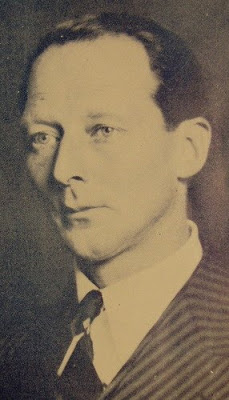
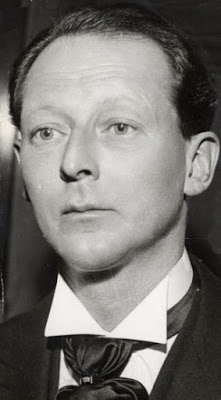
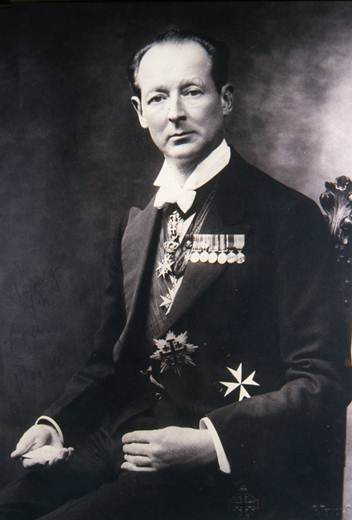
Myths about Evan Morgan, Viscount Tredegar of Tredegar House, Newport
William Cross, FSA Scot, an authority on the Morgans of Tredegar House, biographer of Evan, Viscount Tredegar sets the record straight on the myth of Evan’s so called ‘black box’ of secrets.
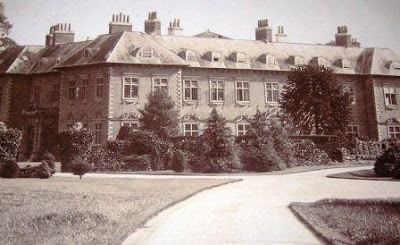
On a visit to Tredegar House, in Newport, South Wales, a National Trust showpiece, historian William Cross was dismayed to learn
that tales were still being spouted to visitors about the Morgans that are
without foundation. Cross is author/ editor of several books on Hon. Evan
Morgan, the last Viscount Tredegar who died in 1949.
Cross is also an authority on the
Morgan women and author of biographical works on Evan including “Not Behind
Lace Curtains: The Hidden World of Evan, Viscount Tredegar, Evan, Viscount
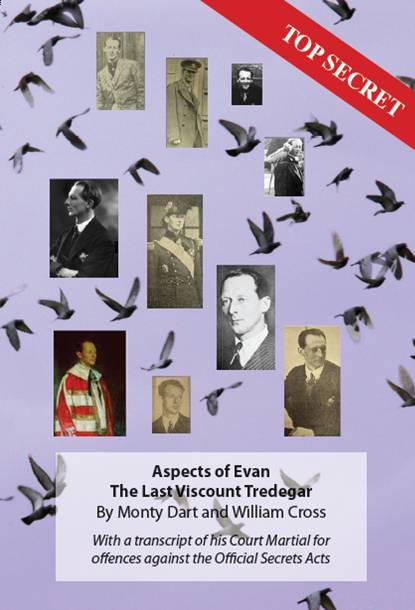
Tredegar: The Final Affairs”. He is also co-author (with fellow historian Monty
Dart) of “Aspects of Evan: The Last tViscount Tredegar” and a book of Evan’s
letters and prose.
Tredegar House in Newport, South Wales is
currently managed by the National Trust. Cross says : “As the Morgan family’s
custodians the National Trust is responsible for the highest standards possible
in maintaining the accuracy of the Morgan family history, they should not
therefore encourage examples of inaccurate history. Moreover no one seems to be
in charge of monitoring the information given to the excellent and helpful
volunteers who because of erroneous ‘facts’ on the room cards and tales they
have been told, repeat old and specious stories.” An insider told Cross that
“the general feeling amongst the volunteers is that no one seems to know the
real stories and they just repeat what they have been told. Even the volunteers
feel uncomfortable about the authenticity of some of the stories they tell.” In
Cross view “ inventing Morgan history is misconduct.”
One of Cross’ particular
criticisms relates to what he describes as “untrustworthy stories about Evan
Morgan’s so called ‘BLACK BOX’ of secrets. ” “It is claimed that certain
personal and private documents about or written by Evan, who died in 1949, and
that have allegedly come to light since his death could only have come from the
mysterious ‘black box’ he is said to have left behind. ” Cross comments that
despite ten years of detailed examination of Evan’s life and times, exhaustive
research in public and private archives including the Tredegar Archives at the
National Library of Wales he “has never found, seen nor been satisfied of the
truth of the existence of any evidence that it is mooted as coming from the
documents Evan left behind in a ‘black box’ .”
Cross says the stories of
documents from the ‘black box’ are “misleading embellishments of the actual
truth”. Those that have chosen to mislead and perpetrate the misleading stories
have openly said ‘Why tell a true story when a lie is more interesting or
amusing?’ Cross explains: “Not just a box but the term ‘black box’ has been
invented to give it a special significance, and aura. The exact description by
Evan himself of the material he left behind is crystal clear, evidence left for
two of his friends, Henry Maxwell and Cyril H Hartmann to compile a biography.
The keynote reference in Evan’s Will is: “........documents of a personal
nature whether comprising manuscripts in my own hand or typescript together
with all my personal letters and papers contained in several tins and other
boxes...” Evan’s Last Will and Testament makes no mention of any ‘black box’ he
describes his private collection of letters etc as being “in several tins and
other boxes.” Cross adds “There’s no reference to a ‘black box’, yet these
scurrilous tales persist, all fiction. Besides making up the existence of this
so called ‘black box’ those who wish to invent history that this mythical
‘black box’ was buried by a footman in the grounds of Tredegar House (or deep
down in some other Morgan turf) dedicated to saving Evan’s secret cache. ” Evan
Morgan died of cancer in 1949 at his last home of Honeywood House, near Dorking
in Surrey. It unnerved his family Executors
that undesirables were waiting on the wings to seek monetary claims against
Evan. One of Evan’s favoured young men, the author, the late Robin Bryans
refers to lawyers bracing themselves over the management of claims from Evan’s
male lovers.
To set the record straight William Cross provides the following
extract from his book “Aspects of Evan” (co-written with fellow historian Monty
Dart ). This sets out their researches about the meeting of Evan’s Executors
after Evan’s funeral and about the fate of Evan’s private papers
From Aspects of Evan: The Last
Viscount Tredegar When Shall We Three Meet?
"In a scene resembling the
meeting of the three witches at the commencement of the Scottish play by
Shakespeare, the hurly burley had already been done. With the funeral rites over
a serious task lay before the conspirators. What had Evan left behind in the
mysterious boxes in his final last home at Honeywood House, Dorking? His last
will and testament was clear enough. It stipulated: “To such of my friends
Henry Maxwell (son of W B Maxwell) and Cyril Hartman B. Lit of University
College Oxford as shall be living at my death and if more than one equally
between them all my books concerning myself or written by myself at present in
the sitting room at Honeywood House aforesaid and all documents of a personal
nature whether comprising manuscripts in my own hand or typescript together
with all my personal letters and papers contained in several tins and other boxes
and without imposing any binding or legal obligation on them I express my
desire that they will from the information to be obtained from such books
papers and documents be able to write a biography of my life.”
At the time of Evan's death neither Henry Maxwell nor Hartmann (Cyril Hughes Hartmann) were aware of the burden Evan had placed on them. When approached on the subject of Evan’s biography in the years that followed they could only answer that they were hardly aware of Evan’s wishes, albeit they knew Evan wanted someone to write his life story and they were unaware of the aforementioned boxes and papers. The material had certainly not come into their hands. Evan proved a burden on his Executors The decision made by Evan’s Executors, Charles Alexander Carnegie, 11th Earl of Southesk, Raymond Alexander Carnegie and Theodore Henry Edgcome Edwards to spurious efficiency, resulted in an act of censorship. This reflected the time and era of Britain in 1949. Evan’s homosexuality - though well known in his own circles was not for public revelation. These three wise men had no stomach for a scandal of any dimension, the contents of the tins and boxes and any other records must be destroyed and Evan’s scandalous past erased. It was how things were done. It was fulfilled as an act of terror, Evan’s life over, he must be denied martyrdom and his secrets expunged. The good name of the family must be preserved. One, probably at worst false, at best allegorical account says that across the length and breadth of the family’s outposts an edict was announced to torch everything about and written by Evan Frederic Morgan. It was even said that the funeral pyres burned in some places for hours. Although such a reference as the latter scene is almost certainly fictitious, it represents the fear that had passed through Evan’s conservative minded, royally linked family.
So many false stories have been created about Evan Morgan simply to amuse, to dramatise his actions and deeds and excuse chaos in humour and allegory, in what amounts to a sometimes wicked, selfish and sordid existence, a life of extravagance and improvidence.
Please contact the Author William Cross for more details.
williecross@aol.com